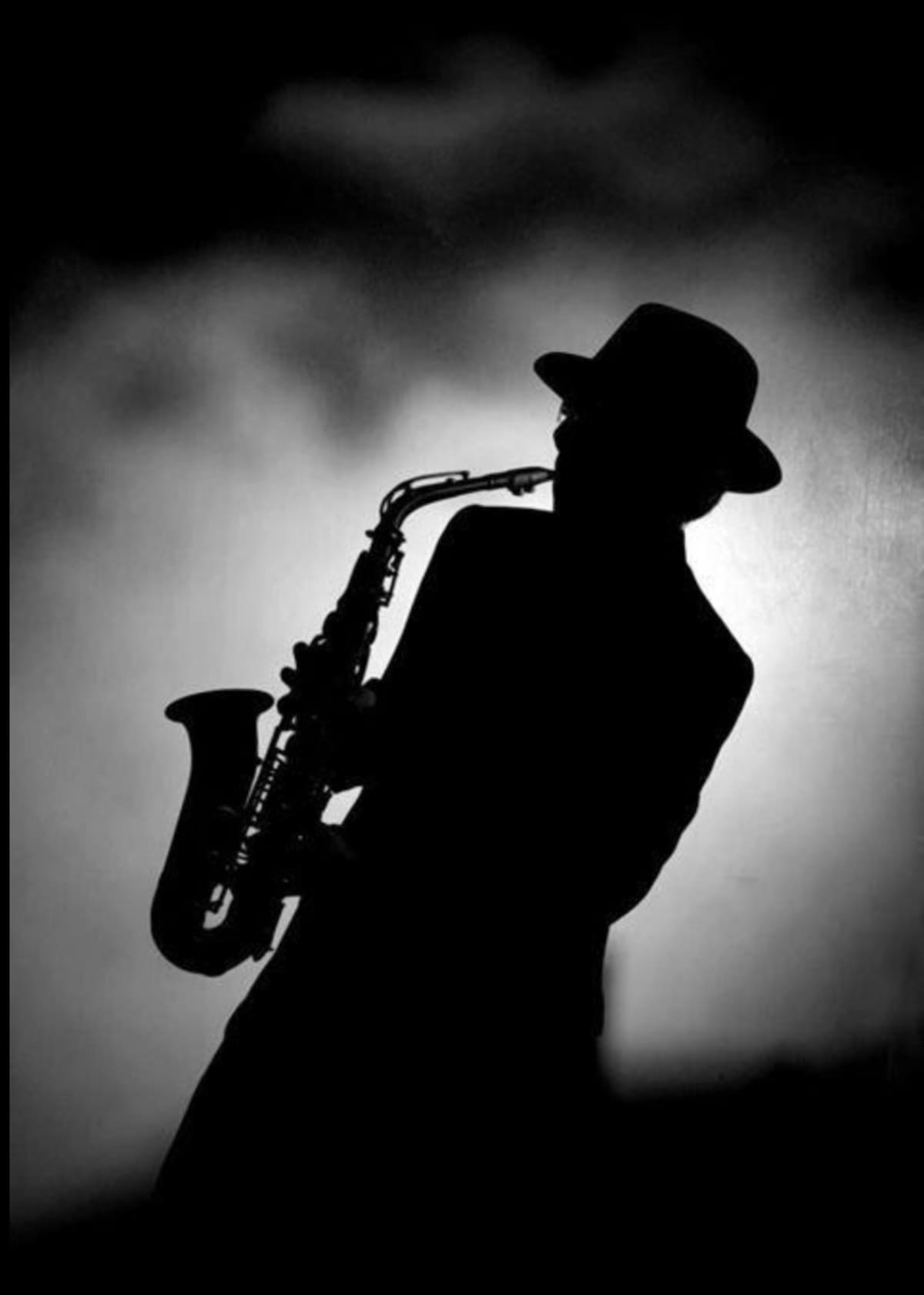
When people think about classic detective stories, they usually picture a man in a fedora walking down a rain-soaked street. Before long, they hear a saxophone. I like that. The saxophone fits noir. As an aside, I spent ten years playing one, from fifth grade through my sophomore year in college with the Pride of Oklahoma marching band. During all those rehearsals, concerts, football games, and endless practice, I never once thought I was learning the soundtrack to hardboiled detective fiction.
I played alto saxophone, and I’ll admit to a little bias. The tenor sax usually gets the credit for that smoky, late-night noir sound. Alto players are allowed to disagree.
The truth is, there’s nothing mysterious about a saxophone. It’s just another instrument. Yet somewhere along the way, movies, jazz clubs, and detective stories linked its sound with lonely streets, cigarette smoke, a jigger of whiskey, and private eyes who knew better than to completely trust their next client. Once that association took hold, it never really went away.
Today, hear a saxophone over the opening scene of a detective movie and your mind immediately knows what kind of story you’re likely to watch. The music tells you as much as the trench coat and fedora.
Decades after I put my saxophone back in its case for the last time, I found myself writing my own hardboiled detective stories. Frank “Twitchy” O’Brien walks the streets of 1935 Alexandria instead of Los Angeles or San Francisco, but he belongs to that same group of classic private investigators.
When it came time to create a trailer for Wrong Day to Quit, choosing the music wasn’t much of a decision. A saxophone was the only choice.
Maybe that’s because Hollywood trained us to expect it. Or maybe, after spending ten years behind a saxophone, I was looking for an excuse to bring it back one more time. Either way, I wasn’t about to let the tenor players have all the fun.
Many thanks to DanWC on Pixabay for a great solo.
Wrong Day to Quit
On Amazon
.
1 Like∙
1 Restack